
Brazil's Meal and Food Voucher Interoperability Takes Effect Amid Operational Hurdles
New PAT regulations establish interoperability between payment terminals and cards, alongside fee caps and reduced payout timelines for merchants.
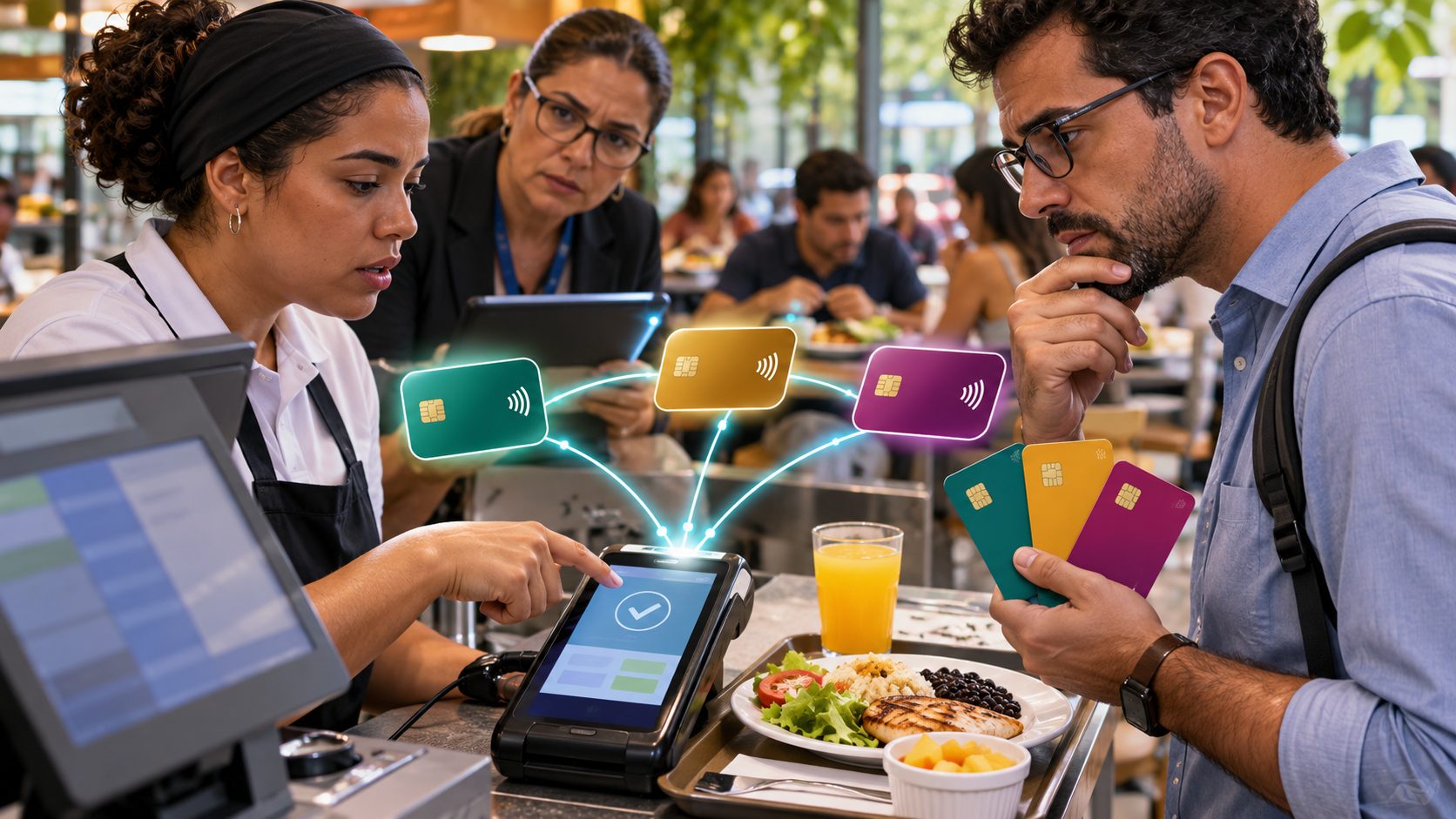
New interoperability rules aim to broaden the acceptance of food and meal vouchers in Brazil.
The Story in 1 Minute
- Brazil has launched meal and food voucher interoperability, letting workers use any brand on any card machine. Backed by PAT rules, the reform caps fees at 3.6% and speeds up merchant payouts to 15 days, aiming to boost competition despite facing technological glitches and industry pushback.
Starting this Saturday, the meal and food voucher system in Brazil undergoes structural changes with the official implementation of interoperability. The measure dictates that cards from different operators must be accepted on any payment terminal enabled to process this type of payment, provided the commercial establishment also accepts the corresponding category. The transition occurs exactly one year after the signing of the decree that updated the Worker's Food Programme (PAT), originally established in 1976.
Benefit sector companies, such as Alelo, Ticket, VR Benefícios, Pluxee, Flash, and Swile, are among those covered by the new government guidelines. In addition to portability between terminals, the decree regulated strict financial limits for commercial operations: the maximum fee charged by operators was set at 3.6% on transactions linked to PAT, while the interchange fee received a cap of 2%. Another central point is the reduction of the payment term, with payouts to establishments required to occur within up to 15 calendar days.
Context and Economic Scenario
Historically, the corporate benefits market in Brazil operated under closed-loop arrangements, where businesses were forced to contract multiple suppliers and acquire specific equipment to accept each voucher brand. This format generated recurring complaints from merchants, who suffered from high fees charged by issuers and receipt timelines that often exceeded 30 days. The government's core objective with the PAT update is to stimulate competition in the sector, reduce operational costs for restaurants and supermarkets, and expand the reach of benefits for workers.
Despite regulatory intentions to foster free competition, the full implementation of interoperability runs into complex technical and operational barriers. The Brazilian Association of Bars and Restaurants (Abrasel) has pointed out that the systems of card-issuing companies and acquirers are not yet fully integrated. According to the entity, the specific channel designed to process voucher transactions presents instabilities and technological bottlenecks, hindering the full functioning of the measure and generating friction in the financial reconciliation of establishments.
How This Affects Your Pocket and Investors
For the worker, the practical change lies in the expansion of options for using the benefit, allowing meal or food vouchers to be used in a wider network of restaurants, bakeries, and supermarkets, regardless of the card-issuing operator. It is worth noting that the rules do not determine an automatic increase or reduction in the face value of the benefits paid by companies, keeping resources strictly tied to their original purposes of food and ready meals.
From the perspective of business owners, especially in retail and out-of-home dining, the fee cap and shortened receipt timeline ease cash flow. However, Abrasel warns of regulatory distortions: some issuing companies are reportedly migrating operations to food assistance modalities strictly provided for in labor legislation, which are not subject to the same fee and timeline limits of PAT, partially attenuating the expected financial relief for store owners and generating legal challenges by sector operators.
Developments and Next Steps
As the official schedule moves toward the full enforcement of the rules in November, the scenario remains under scrutiny by regulatory bodies, class associations, and the Judiciary. Overcoming operational challenges depends directly on continuous investments in technology by acquirers and brands to harmonize data exchange protocols on payment terminals.
At the same time, the legal monitoring of contests presented by operators will define the definitive scope of tariff restrictions and the legal classification of corporate benefits. Businesses and workers must monitor the stabilization of payment systems to ensure that the promise of interoperability works flawlessly at the checkout counter.
What this means for you
The government's core objective with the PAT update is to stimulate competition in the sector, reduce operational costs for restaurants and supermarkets, and expand the reach of benefits for workers.
This contextual analysis is strictly educational and informational regarding macroeconomic trends. It does not constitute investment advice.
Verified Sources & Editorial Transparency
This report was prepared by Lumin Finanças News following journalistic coverage by the outlets listed below, with cross-checked information from original entities:
This story was originally investigated and reported in Brazil. Numerical figures and data remain preserved in their official units.