
Brazil Submits Fiscal Package to Congress Targeting High Public Salaries and Tax Breaks
The proposed legislation aims for a fiscal impact of up to BRL 60 billion in 2027, adjusts fiscal framework rules, and sets a 120-day deadline to debate compensatory allowances.
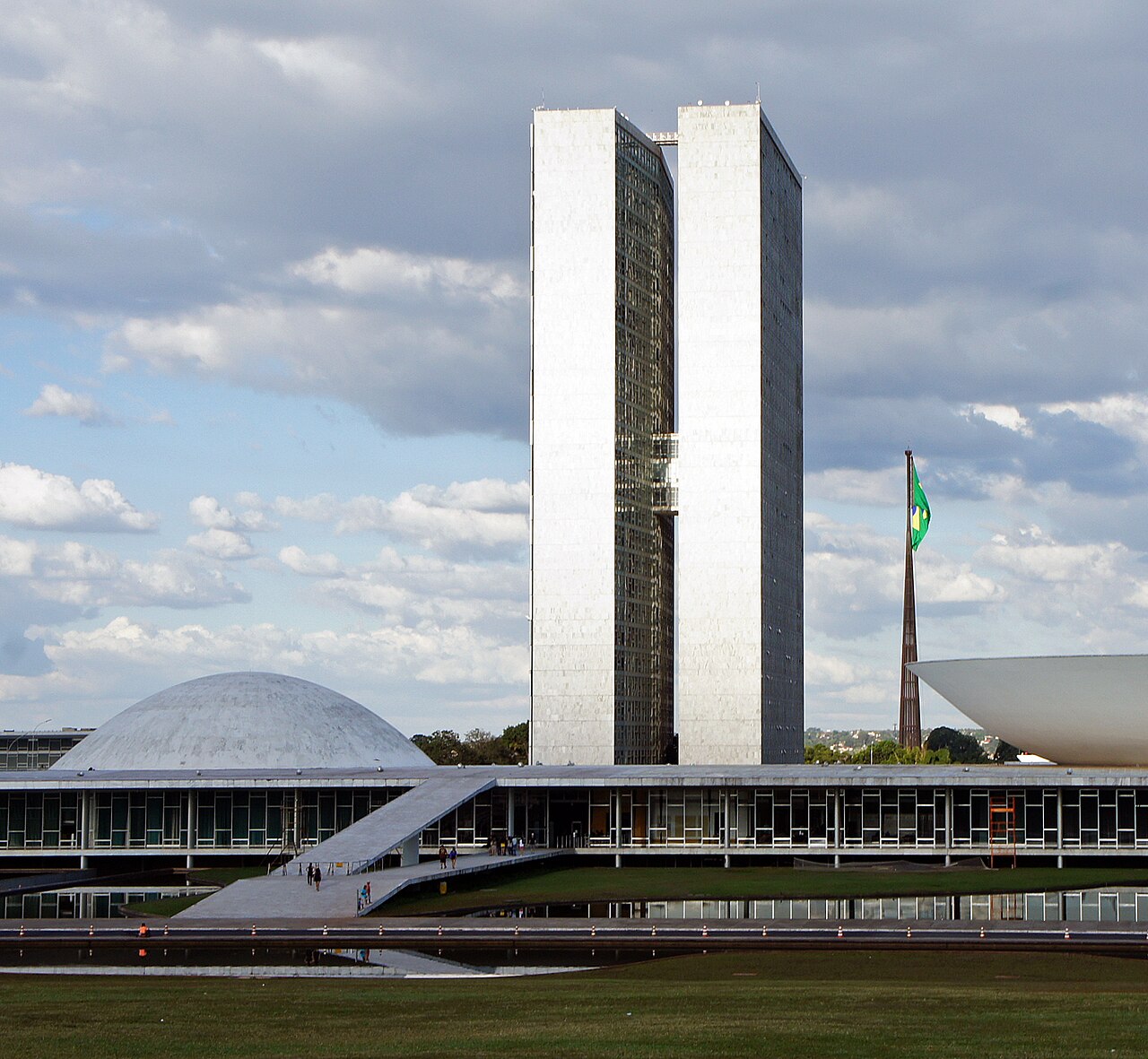
Domes and towers of the National Congress in Brasília, seat of the Legislative Branch and the Independent Fiscal Institution (IFI). Institutional photo: Mario Roberto Durán Ortiz / Wikimedia Commons (CC BY-SA 4.0).
The Story in 1 Minute
- Brazil's government has introduced a fiscal package to Congress seeking to save up to BRL 60 billion by 2027 through public salary caps, spending limit adjustments, and corporate tax cuts.
The federal government has officially filed a fiscal adjustment package in the National Congress structured to improve public accounts and ensure expenditure sustainability. Presented by Senator Jaques Wagner (PT-BA) and negotiated with the Legislature, the set of measures projects an estimated fiscal impact between BRL 50 billion and BRL 60 billion for the year 2027. During a hearing at the Joint Budget Committee (CMO), the Secretary of Planning and Budget, Bruno Moretti, noted that the strategy seeks to rationalize spending and review privileges without compromising essential public policies.
Among the main fronts of the proposal is the regulation of compensatory allowances paid to public servants, which currently can exceed the constitutional public sector ceiling of BRL 46,366.19 per month. The text establishes a 120-day period for lawmakers to analyze the rules, with the expectation that the Budget Guidelines Law (LDO) will indicate the allocation of saved resources toward areas such as public safety and investments. Additionally, the package includes a 20% reduction in various tax benefits granted to companies, altering exemptions, reduced tax rates, and tax credits.
Context and economic scenario
The advancement of the fiscal package occurs at a time of intense pursuit of balance in Brazilian public accounts and compliance with the targets established by the fiscal framework. The drafting of the measures involved direct coordination between the Executive branch, also represented by Treasury Secretary Dario Durigan, and congressional leadership, under the reporting of Senator Eduardo Braga (MDB-AM). The central objective is to contain the growth rate of mandatory expenditures and open up fiscal space for upcoming financial years, responding to macroeconomic pressures for greater budgetary predictability.
In addition to reviewing privileges and tax incentives, the bill modifies structural rules of the framework. Among the changes is the authorization to reduce the real expenditure growth limit from 2.5% to 2% per year starting in 2027, and permission to remove up to BRL 10.5 billion in diesel subsidies from the 2026 fiscal target calculation. The text also establishes limits for public funds, export financing operations, and temporary transfers to states, while preserving minimum constitutional linkages for health and education.
How this affects your pocket and investors
For investors and the financial market, the processing of a large-scale fiscal adjustment package serves as an important barometer for the credibility of economic policy and the trajectory of public debt. The promise of saving tens of billions of reais in 2027 tends to influence inflation expectations, risk premiums on local assets, and the future pricing of the benchmark interest rate, the Selic. However, analysts point out that the absence of a detailed calculation methodology in the initial project and the exact uncertainty regarding which business sectors will be hit by the 20% reduction in tax benefits generate short-term uncertainties.
From the citizen and taxpayer's perspective, the impacts will depend directly on how Congress handles the processing and approval of the measures. The eventual restriction of high salaries in public service addresses historical demands for fiscal justice, while the revision of corporate tax incentives could lead to cost pass-throughs to final prices of products and services depending on the elasticity of each affected sector. Simultaneously, the use of extraordinary sources and the easing of specific targets, such as diesel subsidies, demonstrate the complexity of balancing fiscal rigor with maintaining price stability on essential items.
Developments and next steps
With the official filing of the complementary bill, the matter is now formally proceeding through the National Congress under the reporting of Senator Eduardo Braga. The immediate focus concentrates on meeting the stipulated 120-day deadline for discussions surrounding the regulation of compensatory allowances for public servants.
While parliament debates the changes to expenditure rules and tax incentives, the government continues its political coordination to accelerate the package's approval. The financial market and economic analysts await the detailing of calculation methodologies and the exact measurement of the revenue impact of each sectoral measure.
Editorial Note: This content is strictly analytical and informative, based on available official evidence, without any promotional or commercial intent.
What this means for you
The central objective is to contain the growth rate of mandatory expenditures and open up fiscal space for upcoming financial years, responding to macroeconomic pressures for greater budgetary predictability.
This contextual analysis is strictly educational and informational regarding macroeconomic trends. It does not constitute investment advice.
Verified Sources & Editorial Transparency
This report was prepared by Lumin Finanças News following journalistic coverage by the outlets listed below, with cross-checked information from original entities:
This story was originally investigated and reported in Brazil. Numerical figures and data remain preserved in their official units.