
Google Dismantles Botnet of 1.3 Million Infected TV Boxes, With Brazil Heavily Impacted
Factory-installed malware scheme by Videostrong generated illicit revenues through ad fraud, exposing vulnerabilities in the global hardware supply chain.
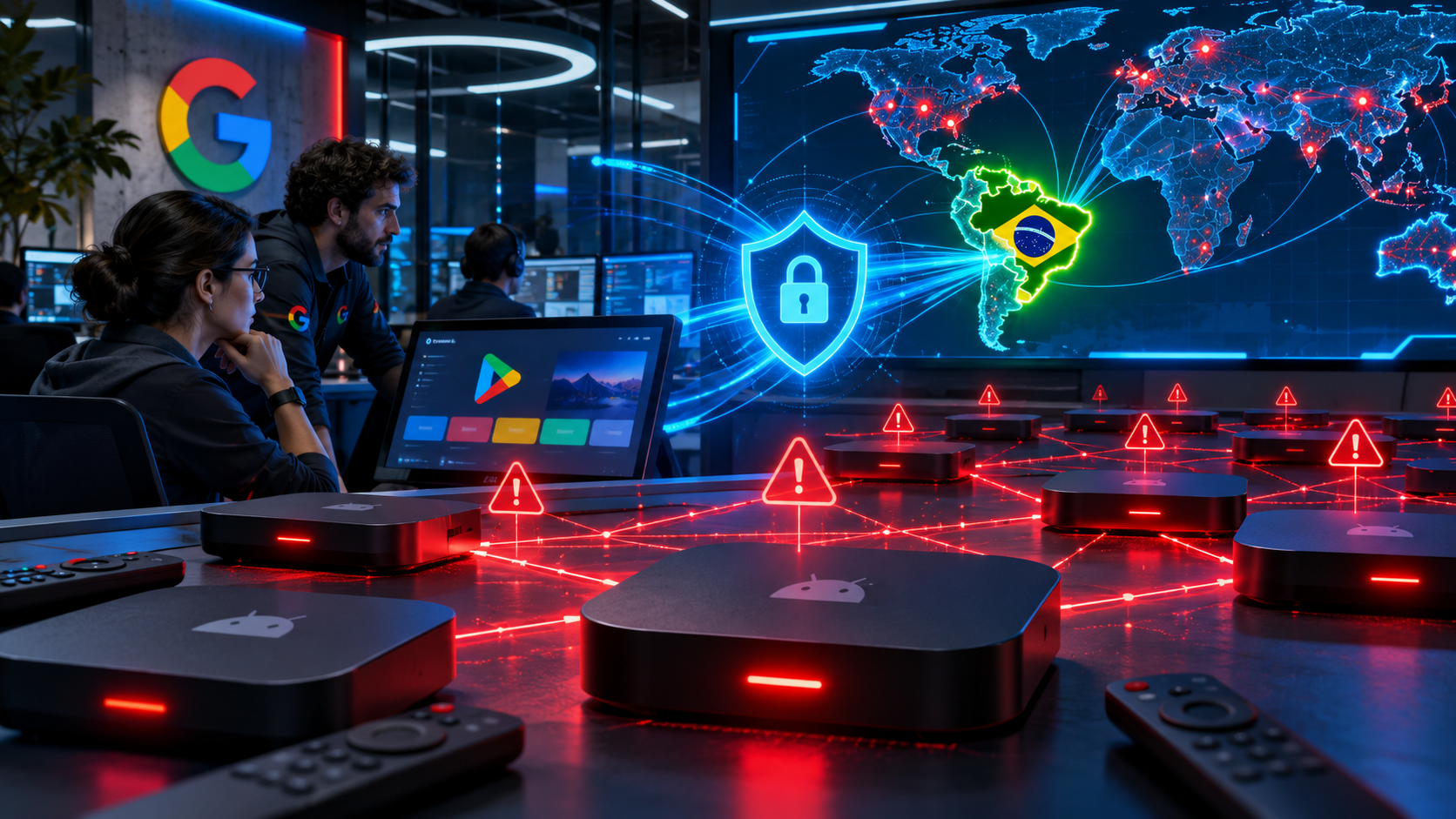
Google acts against a compromised streaming device network associated with approximately 1.3 million TV boxes, with Brazil among the affected countries.
The Story in 1 Minute
- O Google, em operação conjunta internacional, desarticulou uma botnet de 1,3 milhão de dispositivos infectados pelo software malicioso XCPE.
- O núcleo do esquema, identificado pela empresa, operava através de um código malicioso chamado XCPE, que vinha pré-instalado nos aparelhos.
- A análise técnica revelou que a fabricante Videostrong, sediada em Shenzhen, na China, inseriu deliberadamente esse software em seus produtos.
In a coordinated international cybersecurity operation, Google has confirmed the dismantling of a malicious infrastructure controlling approximately 1.3 million devices globally, including Android TV boxes, telemedicine equipment, and digital signage systems. The core of the scheme, identified by the company, operated via malicious code named XCPE, which came pre-installed on the devices. Technical analysis revealed that Shenzhen-based Chinese manufacturer Videostrong deliberately embedded this software in its products. The economic motivation was monetization via ad fraud: criminals used the infected devices to simulate ad views, generating fraudulent revenues on a massive scale without the knowledge or consent of the end-owners of the equipment.
The scope of the incident is global, with infections recorded in 170 countries. Brazil occupies the worrying second position among the most affected nations, behind only Malaysia, according to data from cybersecurity consultancy Trend Micro. This scenario highlights the vulnerability of emerging markets to the influx of low-cost hardware that bypasses rigorous compliance controls or evades such processes using sophisticated techniques. Google stated that Videostrong used tactics to conceal the malicious code, allowing it to load only after device startup, which let it evade compatibility and security tests required for Android TV system certification.
Context and Economic Scenario
The consumer electronics supply chain structure is characterized by a complexity that sometimes facilitates security negligence. In Videostrong's case, the breach of trust was not a programming error, but a predatory business model embedded in manufacturing. The ability of a manufacturer to install system-level malware (firmware) before the product reaches the final consumer poses a systemic risk to the integrity of digital infrastructure. This modus operandi bypasses traditional home user security defenses, who assume by default that purchased hardware is integral.
From a macroeconomic standpoint, incidents of this nature affect confidence in the streaming and IoT (Internet of Things) technology market. Google's reaction was drastic and immediate: the total severance of commercial relations with Videostrong and a ban on the company producing certified Android devices or providing software to other certified manufacturers. This measure aims to protect the Android ecosystem, but also serves as a signal to the market that supply chain governance will be stricter. Google's cooperation with international agencies, such as the National Police Agency of Japan and companies like Lumen and HUMAN Security, demonstrates the complexity of the investigation required to track botnets of this magnitude.
In Brazil, Anatel reiterated that the use of non-type-approved equipment poses risks that transcend the device's functioning. The agency's inspection superintendency highlighted that such devices not only compromise consumer experience but act as vectors for direct threats to national cyber infrastructure, overloading networks and operating as entry points for illicit activities controlled remotely. The issue of type-approval (homologação) therefore ceases to be merely a bureaucratic hurdle and becomes a pillar of digital sovereignty and basic security.
How It Affects Your Pocket and Investors
For the end consumer, the immediate impact is exposure to digital security risks, loss of privacy, and degradation of device performance. Infected devices operating as part of a botnet consume broadband and processing resources covertly, which can result in unexpected slowdowns and excessive mobile or home network data consumption. Investors and technology sector companies should note that supplier chain integrity has become a material risk factor in the financial statements and market value of tech brands, since regulatory sanctions and reputational losses due to security failures can be severe.
Technology companies and retailers distributing dubious hardware face growing risks of civil liability and precautionary measures from regulatory agencies. The trend is toward tightening global oversight of consumer hardware. Consumers are advised to prioritize products from established manufacturers with compliance to type-approval standards, given that savings made on purchasing uncertified devices can be wiped out by exposure to cyber risks that compromise the security of personal and financial data maintained on home networks.
Developments and Next Steps
The case remains under review by international bodies, and there is currently no definitive timeline for the recall or remote deactivation of all affected devices, although Google has implemented protections to mitigate new contaminations. The cybersecurity industry and regulatory bodies, including Anatel, are expected to maintain vigilance over import and distribution flows of this equipment. Additional investigations may reveal ramifications regarding the total financial volume moved by the ad fraud scheme, a figure that remains under investigation by the involved police authorities.
What this means for you
IT teams, corporate network administrators, and public bodies must ensure hardware integrity and supplier compliance to protect networks against supply chain vulnerabilities and unauthorized remote access.
This contextual analysis is strictly educational and informational regarding macroeconomic trends. It does not constitute investment advice.
Verified Sources & Editorial Transparency
This report was prepared by Lumin Finanças News following journalistic coverage by the outlets listed below, with cross-checked information from original entities:
This story was originally investigated and reported in Brazil. Numerical figures and data remain preserved in their official units.